
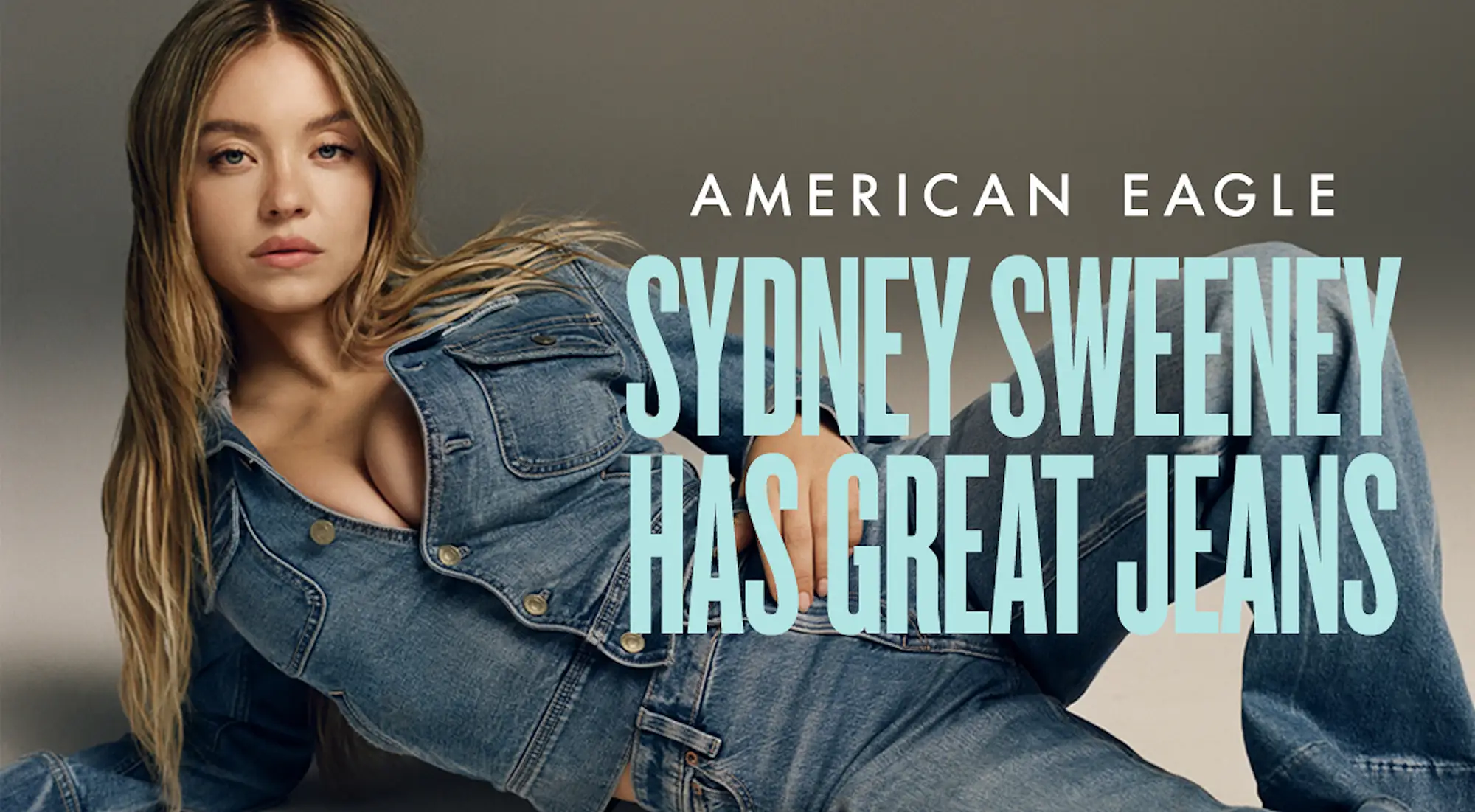
In the world of Public Relations (PR), there has always been the age-old question of whether or not all press is good press. While there isn’t any explicit answer to the question, celebrities and brands alike have tested this query throughout the years. One instance that sparked increased discourse amongst public opinion is the recent American Eagle “Sydney Sweeney Has Great Jeans” campaign, launched in July 2025. The public response to this campaign has been nothing short of explosive, leading PR professionals across the nation to revisit the loaded question: Is all press good press?
The Upside: Visibility + Market Lift
As soon as the campaign dropped, American Eagle’s stock spiked, growing approximately 10% as noted by Reuters. This increased attention and visibility showcases the positive response received through the campaign and its associated press.
The campaign itself successfully grabbed headlines and achieved spiked brand exposure, which the brand likely hoped for. It has had a particularly strong impression on Gen‑Z audiences, resulting in the campaign trending across various social media platforms such as TikTok and Instagram.
The Risk: Ambiguity, Backlash, and Brand Erosion
On the contrary, the campaign also received immediate backlash. Some critics interpreted the play on words “jeans/genes” coupled with Sydney’s blonde hair and blue eyes, as a possible nod to eugenics or outdated ideals. What resulted from these claims was a string of accusations of “tone-deaf” or “coded” messaging, underscoring how ambiguous communication can amplify risks of misinterpretation. These interpretations fueled arguments that the lack of diversity in the campaign paired with the pun’s implications reaffirmed cultural privilege rather than challenged it.
Brand Response: Containment Strategy
On August 1, American Eagle took to their Instagram story and responded publicly, defending the campaign and insisting the message was only about denim, not genetics: “Great jeans look good on everyone” and “Her jeans. Her story.” They also expanded imagery to include more diverse models and highlighted charitable components, noting 100% of proceeds from the “Sydney Jean” go to Crisis Text Line, raising awareness of domestic violence.
Still, many observers noted that the pros tied to the campaign went largely unnoticed due to the public uproar.
So: Is all press good press?
While there is still no straightforward answer, the American Eagle “Sydney Sweeney Has Great Jeans” campaign can be used as a tangible example of the pros and cons tied to negatively received press. Understanding the response to this campaign can help other brands gain awareness of today’s media landscape, and influence their campaigning practices moving forward.
Lessons for PR and Brand Teams
- Ambiguity is high risk: Clever wordplay can energize or alienate marketing efforts. To better ensure positive response, test sensitive language before launch, especially with visual cues tied to identity.
- Diversity must be intentional: If you’re using a pun or symbolic imagery, pair it visibly with inclusive representation, otherwise critics will read and interpret what’s not there.
- Have a fast response plan: American Eagle responded, but not before public speculation readers spread widely. In the case of misconstrued efforts, respond promptly with your own words and values, rather than letting external sources define them for you.
Final Thought
The Sydney Sweeney x American Eagle campaign underscores the enduring paradox at the heart of PR: is all press truly good press? As with most worthwhile questions, there’s no universal rule for what qualifies as “good” press. It’s ultimately up to the brand to decide how to progress brand growth while ensuring inherent values are effectively communicated. Campaigns like the American Eagle ad can help facilitate more productive marketing efforts for future endeavors if brands take instances like this and learn from them, rather than allowing history to repeat itself. These moments offer more than just controversy; they present an opportunity to reflect, adapt, and evolve in today’s fast-moving media landscape.