
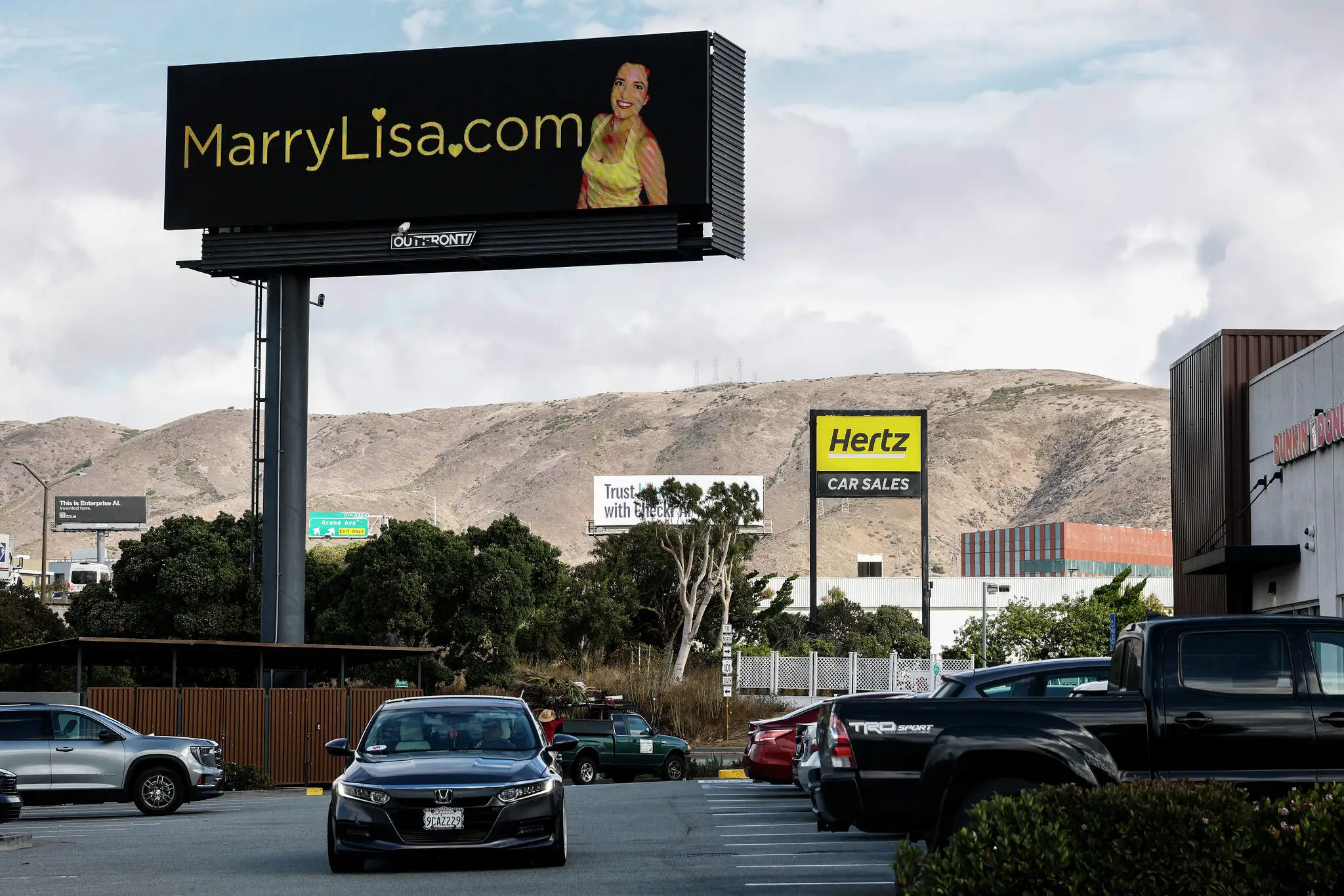
In the middle of Silicon Valley’s billboard jungle, where tech companies fight for attention and most drivers barely glance up, one simple message stood out: “MarryLisa.com.”
In September, Bay Area resident Lisa Catalano rented twelve billboards along Highway 101 to take her search for love offline and into the real world. It was a bold, intentional move, and within weeks, her story spread across major outlets and social media.
Here’s why it worked, and what it tells us about how people connect with stories today.
Vulnerability Builds Trust
Catalano took something deeply personal and made it public, and that’s what made people notice. She was honest about wanting love but how hard it can be to find, something many people relate to but rarely say out loud.
In PR, vulnerability isn’t a weakness, it’s actually what makes stories resonate. Research shows that narratives revealing emotion or failure are 20 percent more likely to be remembered and shared than those that don’t (Harvard Business Review). Catalano’s message worked because it felt genuine, reminding communicators that authenticity lays the foundation for building trust and establishing deeper connection with an audience.
Physical Space Still Matters
In an age where most communication happens through screens, Catalano’s decision to show up in the physical world made all the difference. Studies show that people remember real-world experiences almost twice as well as digital ones because they engage more of the brain (Journal of Experimental Psychology). Her message was short enough to read at 65 mph but tangible enough to stay with people long after they passed it.
For communicators, it shows that presence itself can be a strategy. Spotify’s “Wrapped” campaign is a great example of this. What started as a digital recap of listening data transformed into a physical storytelling moment through creative, hyper-local billboards featuring real users and artists in their own cities. Like Catalano’s approach, it worked because it turned something personal into something public, and proved that when stories meet people in their everyday environments, they leave a lasting impression.
It Started a Larger Conversation
The same qualities that draw people in, like emotion, honesty, and vulnerability, can also spark backlash. Catalano learned that firsthand. While many admired her boldness, others mocked or criticized her, and the wave of extreme hate eventually led her to temporarily close the online application form. At the same time, the public reaction became part of the story itself, keeping her billboards in the news and sparking conversations around dating, gender, and the risks of putting yourself out there.
The response is a reminder that not every public reaction reflects a message’s intent. Once a story enters the world, it’s interpreted through personal bias, cultural context, and emotion. The attention Catalano received brings up the age-old question of whether all press is good press, and in her case, the answer is complicated. The conversation kept her story alive, but it also showed that visibility comes with risk. For communicators, understanding that gap between message and perception, and preparing for how a story might evolve once it’s public, is essential to managing its impact.
Final Thoughts
Ultimately, Catalano’s billboard experiment showed that the stories that last are the ones that feel real and deliberate. The most effective storytelling starts with authenticity, because when a message reflects a shared human truth, people are naturally drawn to it. It also illustrates that physical presence still matters because people remember what they experience, not just what they see. Finally, it reminds us that conversation will always follow, often on a larger scale than expected, so anticipating response and preparing for it is just as important as the message itself.